My research experiences have led me to produce digital works incorporating GIS mapping, audio storytelling, and creative writing, including content on Afro-Colombian music histories, seventeenth-century free Black communities in the Caribbean, and the legacies of slavery in the Gulf, and the American South. These projects are linked below.
Mapping Resistance
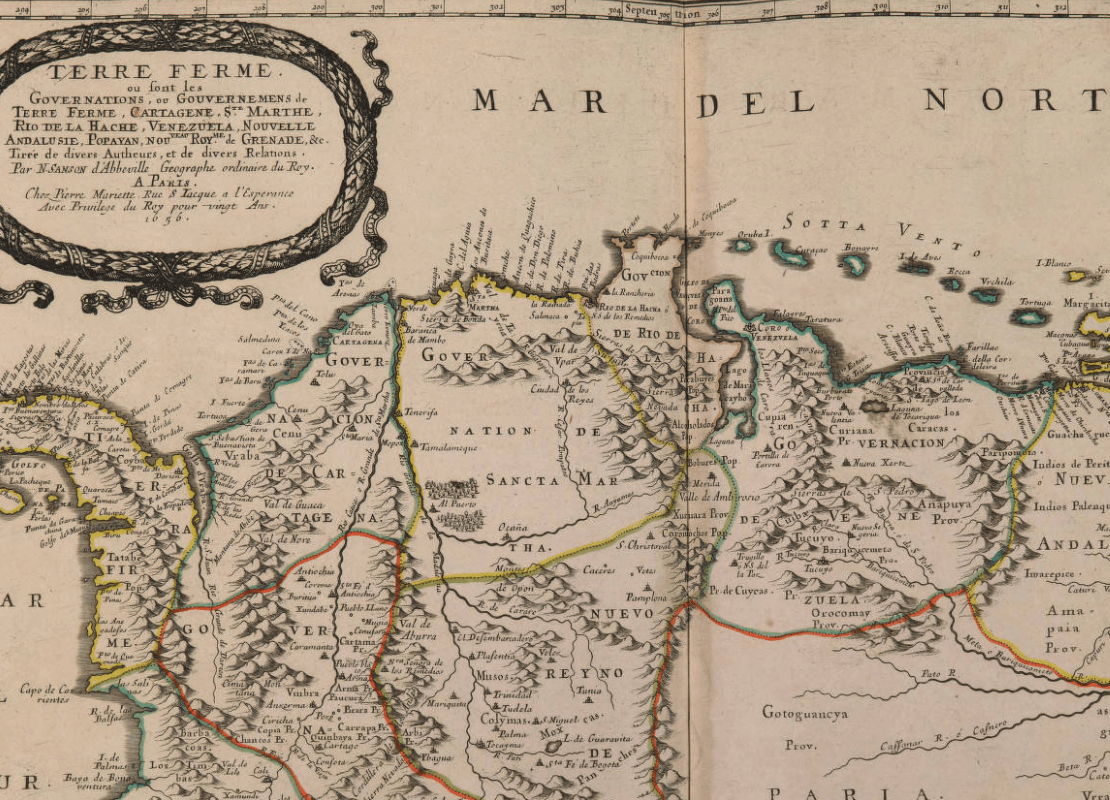
Mapping Resistance is a digital archival in the prototyping stage. It aims to provide users access to historical documents specific to the histories of maroon and free communities in colonial Panama and Colombia during the early modern era. In addition to these selected documents, geographically specific to colonial Panama and Colombia, Mapping Resistance will provide visual context for viewers through digitized map collections highlighting the range of resistive approaches that enslaved and freed people enacted during the colonial era. These archives allow users to visualize the cultural, geographical, affective, and discursive connections between Africa and Latin America. These connections provide opportunities for Africans in the diaspora to connect with diverse peoples’ histories, cultures, and legacies through a Black Atlantic framework. The digital prototype of Mapping Resistance currently is in the stage of research collecting data in archives which discuss the legal histories of Africans in the sixteenth and seventeenth centuries in colonial Panama and Colombia. This research requires access to historical maps, transcription and translation services, and paleography tools and tutorials to assist users and increase their literacy in transcribing documents. As such, Mariah has attended digital humanities training and professional development programming to continue developing skills, but ongoing prototyping phasing are ongoing. If there is any interest in website development or GIS data collection, please send an inquiry with “Mapping Resistance” in the subject line to info@mariahgoesabroad.com.
See link to the project here
Illuminating Blackness in Brazoria County, TX
This StoryMap experience derives from a Rice University Fondren Fellows research titled “Finding and Mapping Archival Images from the Historical Plantations of Brazoria County.” To situate ourselves within the context of Brazoria County, our research team visited Lake Jackson, Texas multiple times in Fall 2023. These visits led us to think deeply about the physical experiences encountered by enslaved people and how little their presence appeared within the archives of the Lake Jackson Historical Museum. While archiving and digitization were significant parts of our research work, we desired to further illuminate an erasure so potently felt throughout our archival work and plantation site visits in this StoryMap. Throughout this StoryMap we are thus led by questions of whose histories are told and, more importantly, how they are told. This project was completed with the following researchers: Precious Akinrinmade, Uilvim Ettore, Hai-Van Hoang, Molly Morgan, and Rohini Pillay. See link to project here.
Houston’s Hip-Hop History Exhibit
As part of the Fondren Fellows research program, I curated an exhibit and revised a bibliographic library guide to help attract more visitors to the archival collections housed in the highlight the Woodson Research Center’s Hip-Hop archival collection. I helped develop enhanced descriptions of the hip hop archives and updated finding aids for users to easily access the collections.
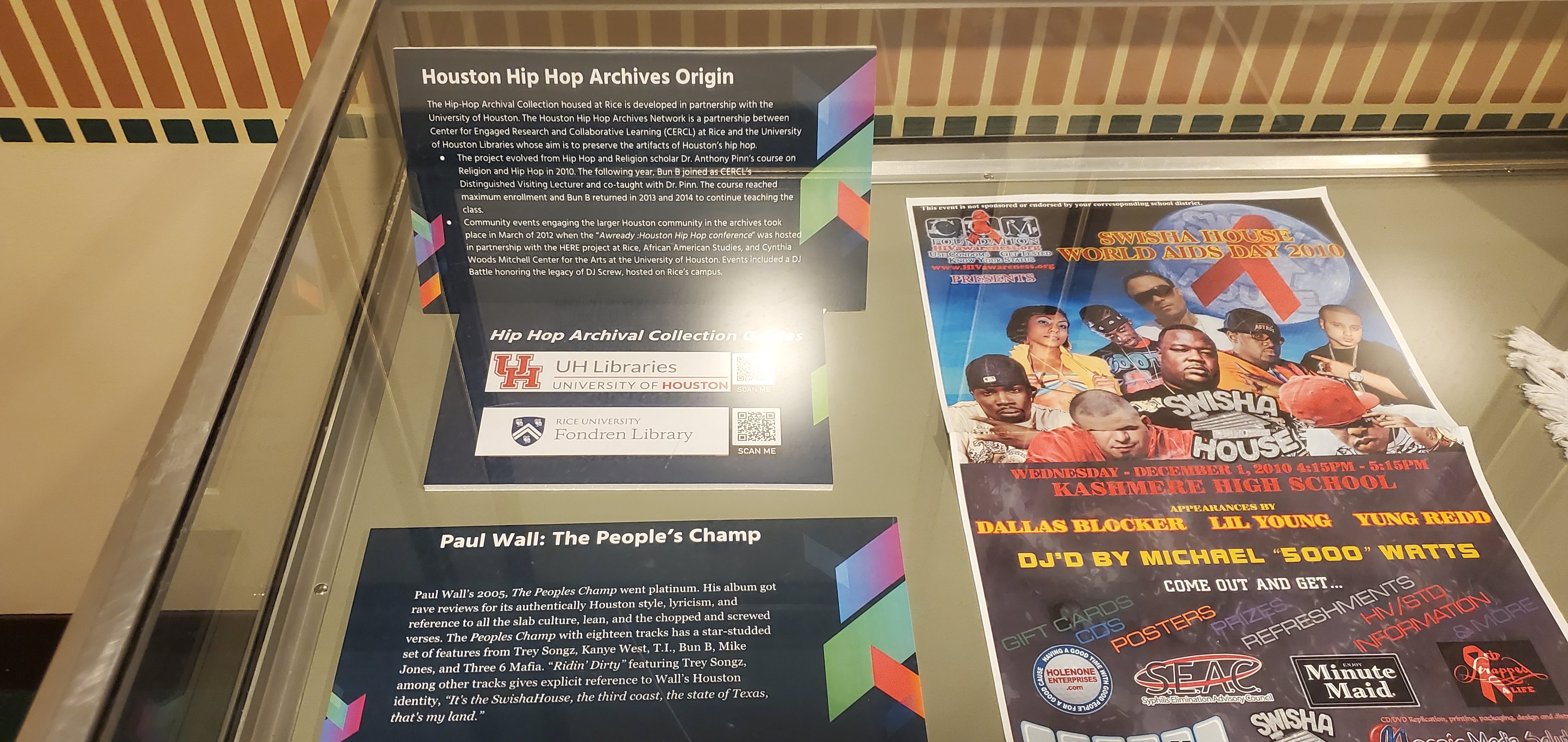

Explore Houston’s Trillest Archives
The Louis and Molly Kaplan Museum of Judaica, Houston Texas
As part of a seminar on Public History, through the University of Houston Center for Public History, is the following catalogue essay of a seventeenth-century amulet found in the amazing Louis and Molly Kaplan Museum of Judaica. For more information on scheduling a visit, click here.
Excerpt from catalogue essay: "Seventeenth Century Italian Judaica"
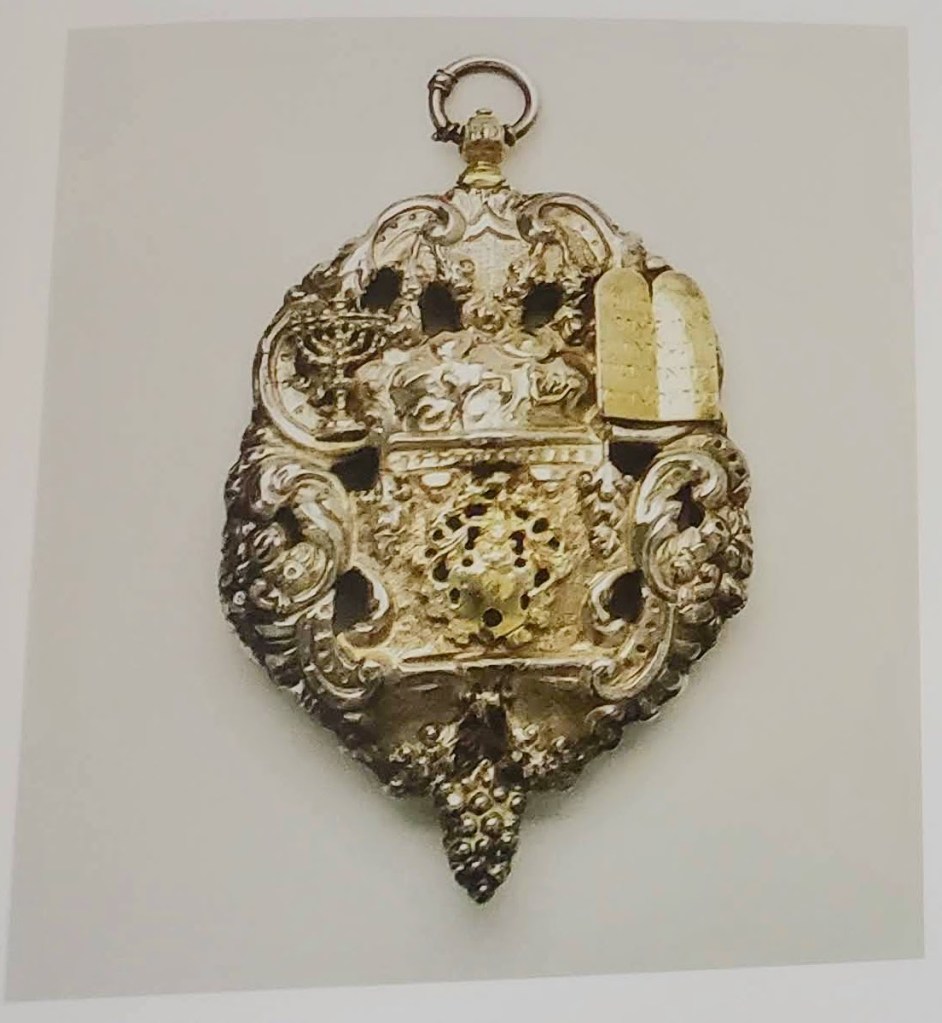
In ritual practice, amulets are used to protect a person or property against danger. In Hebrew, they are known as kam’ea meaning ‘to bind.’ While some Jewish theologians, namely Maimonides forbade against using amulets as magic, other Jews instead asserted that using amulets protect against illness, misfortune, and death in childbirth.[1] Widely used to protect against illness or maladies, amulets, and other ritual objects like mezuzah. Mezuzah is a scroll with Biblical inscriptions often fixed on doorposts of Jewish homes which must be blessed for approved use. This process differentiates amulets and mezuzah from otherwise non-Jewish ritual objects. The amulet’s inscription links it to traditional and more approved ritual objects. Apart from the inscription, other linkages to wider uses of the amulet like its size, width, and form also suggest it could have been stored in a synagogue.
[1] Raphael Patai, and Ḥayah Bar-Yitsḥaḳ. Encyclopedia of Jewish Folklore and Traditions, Armonk, N.Y: M.E. Sharpe, 2013, 28.
 mariahgoesabroad